

How to recognise a Thesis pair
Read the straps, sole edges and colour of three Thesis designs, from a brown toe-post sandal to a navy and lime children’s trainer.
Begin with the line across the foot
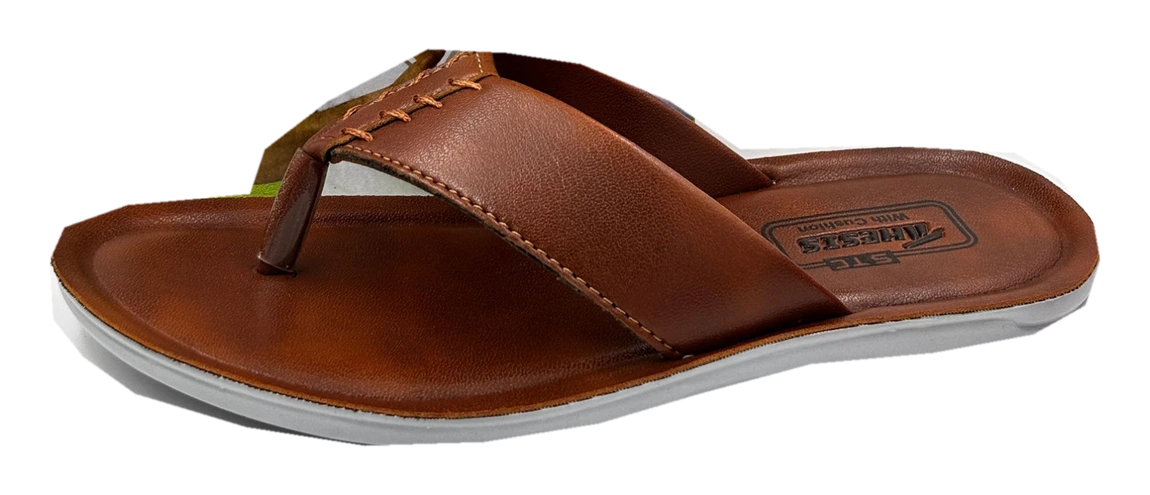
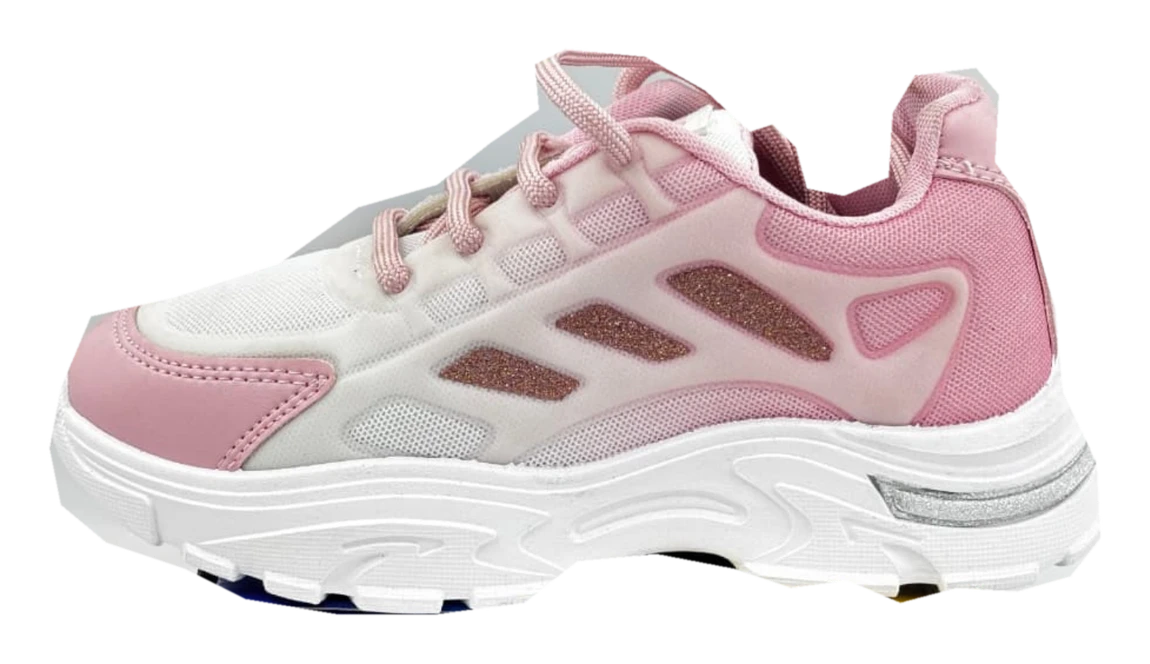
Put our brown toe-post sandal beside the pink lace-up and the family resemblance takes a moment to see. One opens almost the entire foot to view. The other wraps it in panels and laces. Both give your eye a clear path from toe to heel. That is the part of our design language we care about most. A pair should make sense from the shelf, then offer another detail when somebody picks it up.
Start with Article 13009/7. Its brown strap rises from a narrow toe post, spreads into a broad band and lands close to the back half of the sole. The footbed carries the same warm colour. Along the lower edge, a thin pale line lifts the whole shape off a dark shop shelf. Look closer and the little stitches on the strap trace a second, quieter outline inside the first.
Follow the pink and the lime
Article 8001 begins with a much taller silhouette. The pink wraps around the toe, travels up through the laces and returns at the heel. A pale side panel frames darker pink openings, so the colour appears in separate windows as you turn the shoe. Beneath them the white sole has long, curved lines of its own. Even in a side photograph you can follow those curves beneath the crossings of the upper.
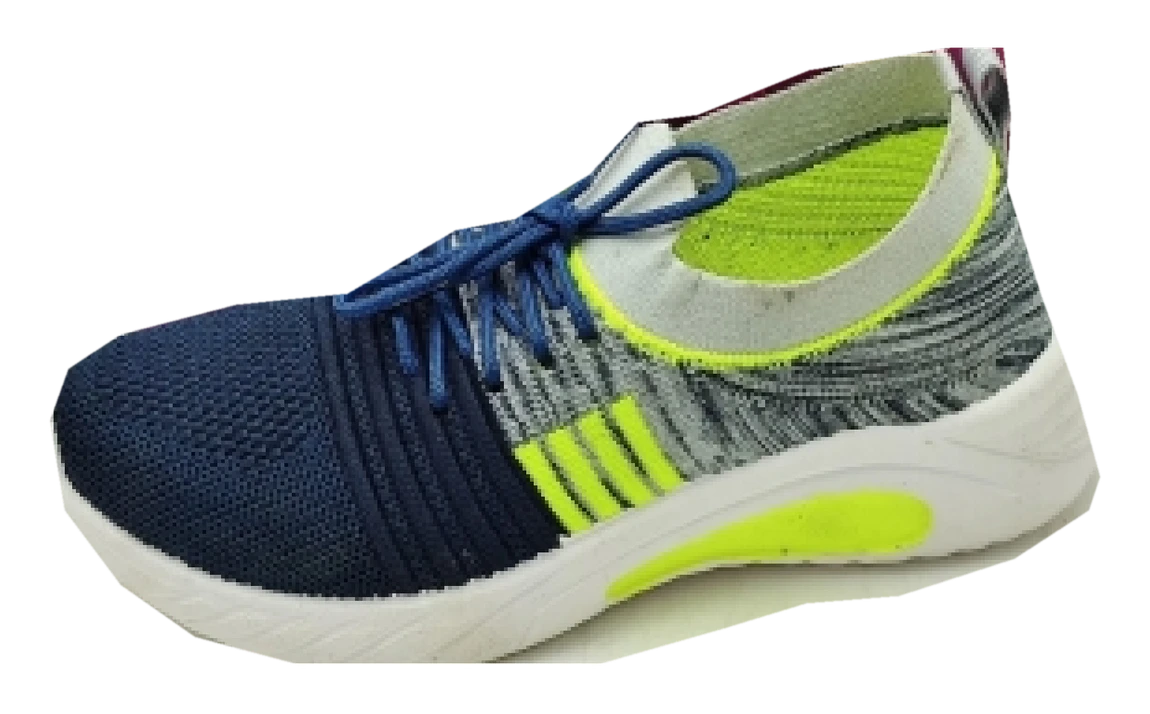
For the children’s trainer, Article 2027, put a finger over the lime at the heel in the photograph. The shoe reads as a quiet navy toe with grey knitting behind it. Uncover the lime and it leads you around the collar, down to the bright marks at the side and into the pale sole. A small patch of colour can connect quite distant parts of a shoe. The navy toe still has space to show its texture.
Give the counter a vote
A dealer in Bengal may have only a handspan of shelf to show each pair. Set these three articles side by side and turn their toes towards you. The broad brown strap still reads clearly. The white front of the pink shoe comes forward. The bright collar of the navy trainer sits well behind its toe, like a small signal at the other end.
Try another exercise with the three catalogue photographs. Trace just the top edge of each shoe onto paper, starting where the toe meets the ground. On the sandal your pencil lifts at the strap and drops almost immediately onto the bed. On the pink shoe it climbs towards the tongue and steps down behind the collar. On the trainer it follows a gentler curve. These little drawings tell us how much of a foot each shape covers before we have chosen a single colour.
Now turn each one sideways. A customer gets a different piece of information from that angle, whether it is the sandal’s shallow heel or the deeper sole under the lace-up. When you order, keep the article number beside the description. Someone asking for the brown sandal with the broad stitched strap should be able to find that very shape again.